By Iwona Stoch, Founder & Strategic Lead, Stoch Hotel Consulting
When a hotel furniture supplier disappears or discontinues a line, the fix is not to buy the closest-looking replacement — it is specification matching: measuring and documenting the original piece precisely, identifying its material and performance attributes rather than just its appearance, then sourcing and physically sampling two or three current manufacturers against that spec before committing to a production run.
This situation is more common than owners expect once a hotel is a few years past its opening FF&E (furniture, fixtures and equipment) package. A chair gets damaged, a nightstand is lost in a room refresh, or housekeeping reports a sofa frame has failed — and the purchase order for that exact item leads to a supplier that no longer exists, or a model the manufacturer stopped producing years ago. The room still needs to look like one coherent design, not a patchwork of eras and finishes. Specification matching is how Stoch Hotel Consulting rebuilds that missing paper trail so the replacement is invisible to the guest.
Why does a hotel furniture supplier disappear mid-lifecycle?
A hotel’s FF&E package is specified once, at a single point in time, against whatever suppliers and product lines existed that year. Guest rooms are then expected to stay visually consistent for a replacement cycle that typically runs several years per category — long enough for the market behind the original purchase order to change completely. A supplier can disappear from that package for several distinct reasons: the manufacturer closes or is acquired and the acquiring company drops the line, the specific model or fabric is discontinued in favor of a newer collection, or the finish and hardware codes are retired even though the manufacturer itself survives. Each of these leaves the same gap — a room with a documented original spec and no living source for it.
How do you replace hotel furniture without the original supplier or spec sheet?
The process is the same whether the missing piece is a single chair or a run of casegoods, and it does not start with a supplier search — it starts with reconstructing what the original item actually was.
- Pull every surviving reference first. The original purchase order, spec sheet, fabric or finish code, and supplier name usually survive even after the supplier itself is gone — a current supplier can often trace a discontinued line from a finish code alone, so this step is worth the time before assuming nothing is recoverable.
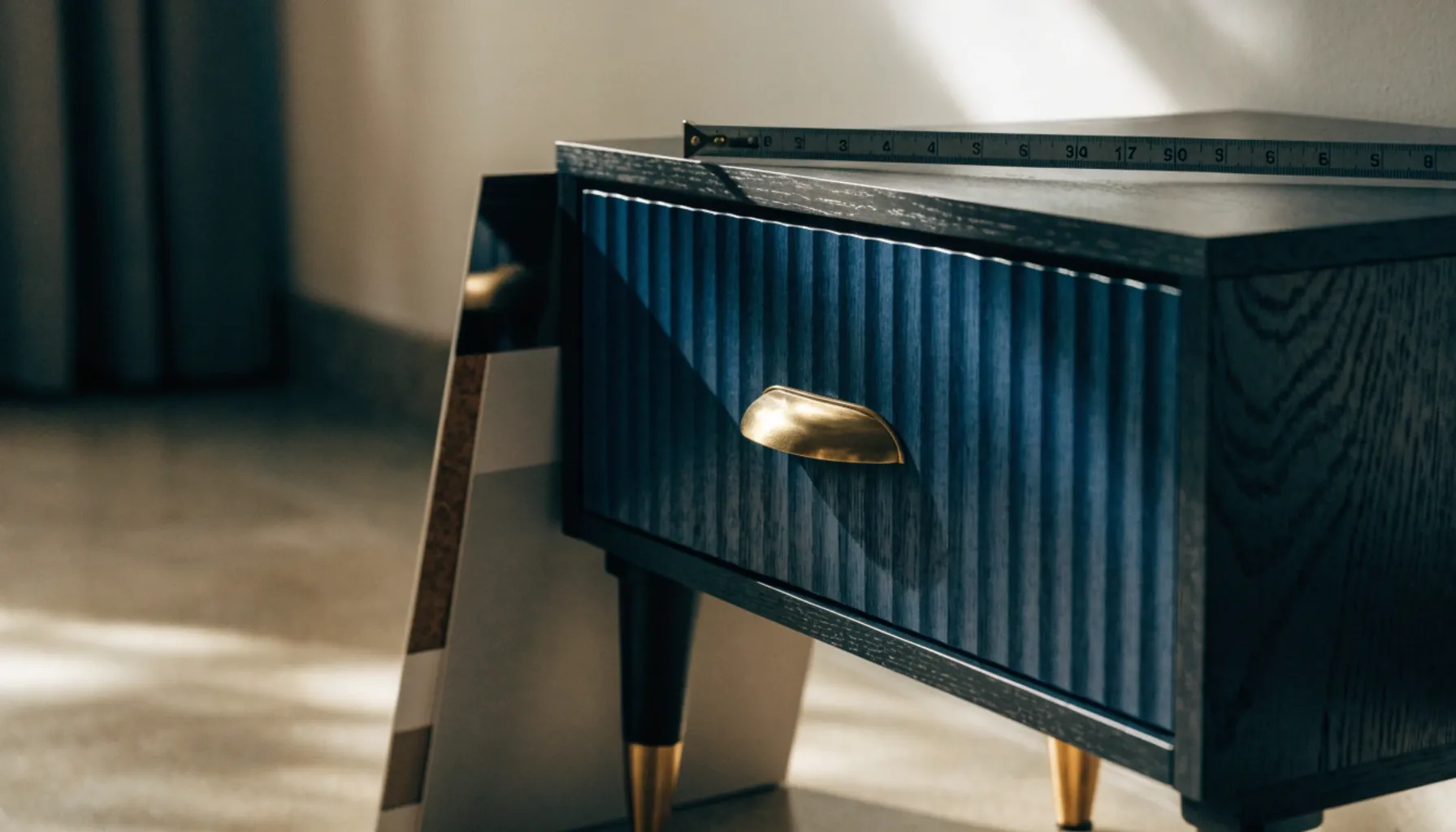
- Measure and photograph the existing piece from every angle, capturing dimensions the original documentation may not have recorded — frame height, arm width, seat depth, leg profile — against a piece that is still in guest-ready condition, not the most worn example in the property.
- Separate how the piece was built from how it has aged. A worn cushion or a faded finish reflects years of guest use, not the original specification; matching a replacement to a deformed or discoloured sample locks in years of wear as the new baseline.
- Identify material composition and performance class, not just colour and texture. For upholstery fabric this means its rated abrasion resistance: the Association for Contract Textiles’ voluntary abrasion guideline — a US-based industry benchmark, used here illustratively — sets two reference tiers: 15,000 double rubs (Wyzenbeek method) or 20,000 cycles (Martindale method) for lower-traffic private spaces, and 30,000 double rubs or 40,000 cycles for high-traffic public areas. Reasoning from ACT’s own categories, a guest room — used by one party at a time rather than continuous public traffic — fits more naturally under the private-space tier, though many hotels specify to the higher public-space tier anyway because of how often one room changes occupants — confirm which tier the original spec actually used before matching a replacement to it. Either way, a fabric that looks identical but is rated for residential use will fail again within a fraction of the original cycle.
- Confirm the fire-retardancy requirement for the piece’s jurisdiction before sourcing. Certification standards for upholstered furniture differ between markets and are not interchangeable across borders, so the replacement needs a current certificate valid for the hotel’s own jurisdiction — not simply a fabric that resembles the original.
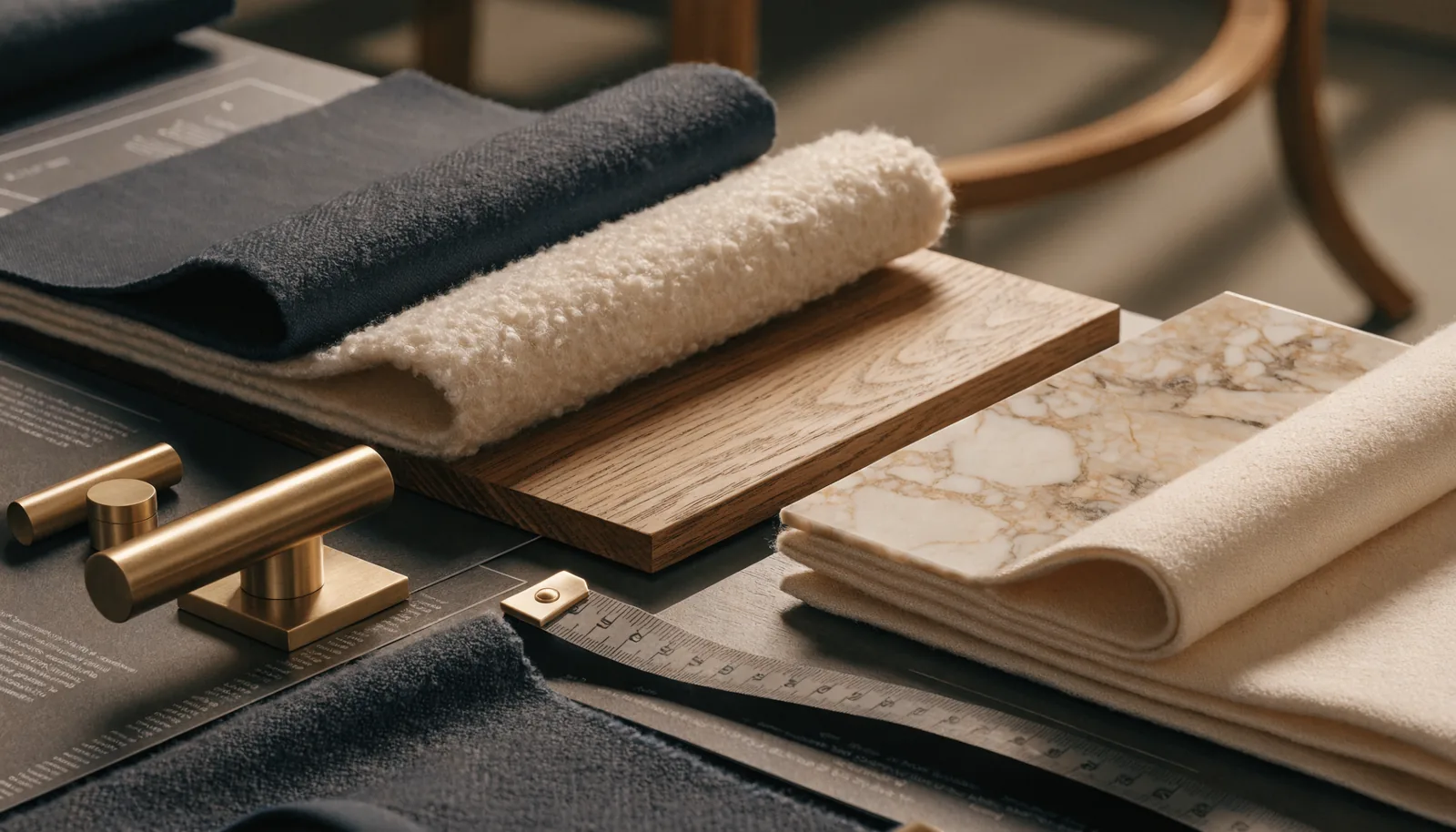
- Source two or three manufacturers able to produce a match, and request a physical sample from each — not a photograph or a swatch card. Colour, sheen and hand feel read differently in a sample under the room’s actual lighting than they do in a supplier’s marketing image.
- Test the sample in the room itself, next to the surviving originals, before ordering the full quantity. This is the same discipline a mock-up room review applies to a full FF&E package, scaled down to a single item.
- Document the new specification in full — supplier, finish code, fabric composition, abrasion rating, fire certificate — so this replacement does not become the next undocumented item when it, too, eventually needs matching.
That sequence borrows its discipline from a field outside hospitality: precision component reverse engineering, where replacing a legacy part without original documentation follows the same order — capture the existing geometry accurately, separate “as-manufactured” intent from “as-worn” reality, then specify the replacement against function and performance rather than appearance alone (see Tarvin Precision’s guide to reverse-engineered replacement components). Hotel FF&E is a different material category, but the underlying problem — recreating a specification with no original source to check it against — is identical.
“I check the original product’s specification carefully, and look for the closest equivalent on the market — the same goes for finding a new supplier when the original one is gone,” says Iwona Stoch, founder of Stoch Hotel Consulting.
What happens if the replacement doesn’t match the original spec?
The room stops reading as one coherent design the moment a guest can spot the mismatch — a chair with a slightly different arm profile, a nightstand finish that reads warmer under the same lighting, upholstery that pills within a year because its abrasion rating was never checked. None of these show up on a purchase order as a mistake; they show up months later, in a guest review or a brand standard inspection, as an unexplained inconsistency. It is also where cost quietly compounds: a fabric with a lower abrasion rating than the rest of the piece’s replacement cycle fails early, forcing the same item back onto the procurement list before its neighbours in the room do. Discontinued lines raise the stakes further — a supplier that no longer exists for a fabric that no longer exists forces a full re-specification rather than a simple reorder, which is exactly the cost a documented spec is meant to prevent.
Should you replace a single piece or resupply the whole set?
That decision belongs to value engineering judgment, not a default rule. A single chair with a confirmed, close match against the criteria above — dimension, material, abrasion rating, fire certificate — can usually be replaced on its own without disturbing the rest of the set. But when the original supplier and its full product line are both gone, and the room’s remaining pieces are also approaching the end of their cycle, matching one item in isolation can cost more in sourcing effort than resupplying the set as a coordinated small-batch run from a single current manufacturer. The FF&E budget owner’s Property Improvement Plan sign-off point is usually the right moment to make that call, because it is the point at which the room’s design intent is being reviewed as a whole rather than item by item.
Frequently asked questions
What does “discontinued” mean for hotel FF&E?
It means the specific model, fabric, finish or hardware code originally specified is no longer produced — either because the manufacturer closed or was acquired, or because the manufacturer replaced the line with a newer collection. The supplier relationship, the product code, or both, are no longer available to reorder against.
Can a discontinued fabric or finish really be matched without the original supplier?
In most cases, yes, provided the original piece can still be measured and its performance attributes identified — abrasion rating, composition, fire certification — rather than matched by eye alone. What cannot be recovered is the exact factory batch; the goal is the closest verified equivalent, confirmed with a physical sample in the room, not an identical reproduction.
Is spec matching more expensive than reordering from the original supplier?
Per item, usually yes — it takes more sourcing time and typically involves sampling from several manufacturers. Skipping it is usually more expensive over the replacement cycle, because an unmatched abrasion rating or fire certificate can put the item back on the procurement list well before it should be.
How long does spec matching typically take compared to a standard reorder?
It depends on how much of the original documentation survives and how specialised the item is, but it is realistic to expect it to take longer than a straight reorder, since it adds measurement, sample sourcing from multiple manufacturers, and in-room testing steps that a reorder from an existing supplier would not need. There is no independently verified benchmark for this specific timeframe — treat it as directional rather than measured, since it depends heavily on how much original documentation survives.
What’s the biggest risk of buying a “close enough” replacement instead of matching the spec?
Two risks, both delayed: a visible finish or colour mismatch that shows up under the room’s actual lighting once installed, and a performance mismatch — usually abrasion rating or fire certification — that only becomes obvious once the piece starts failing on a shorter cycle than the rest of the room.
Iwona Stoch is the founder and strategic lead of Stoch Hotel Consulting, an independent FF&E and OS&E (operating supplies and equipment) procurement consultancy based in Kraków, working with luxury and upscale hotels across Europe since 2011.
Last updated: September 2026.
Ask Stoch Hotel Consulting about matching a discontinued FF&E specification for your property.