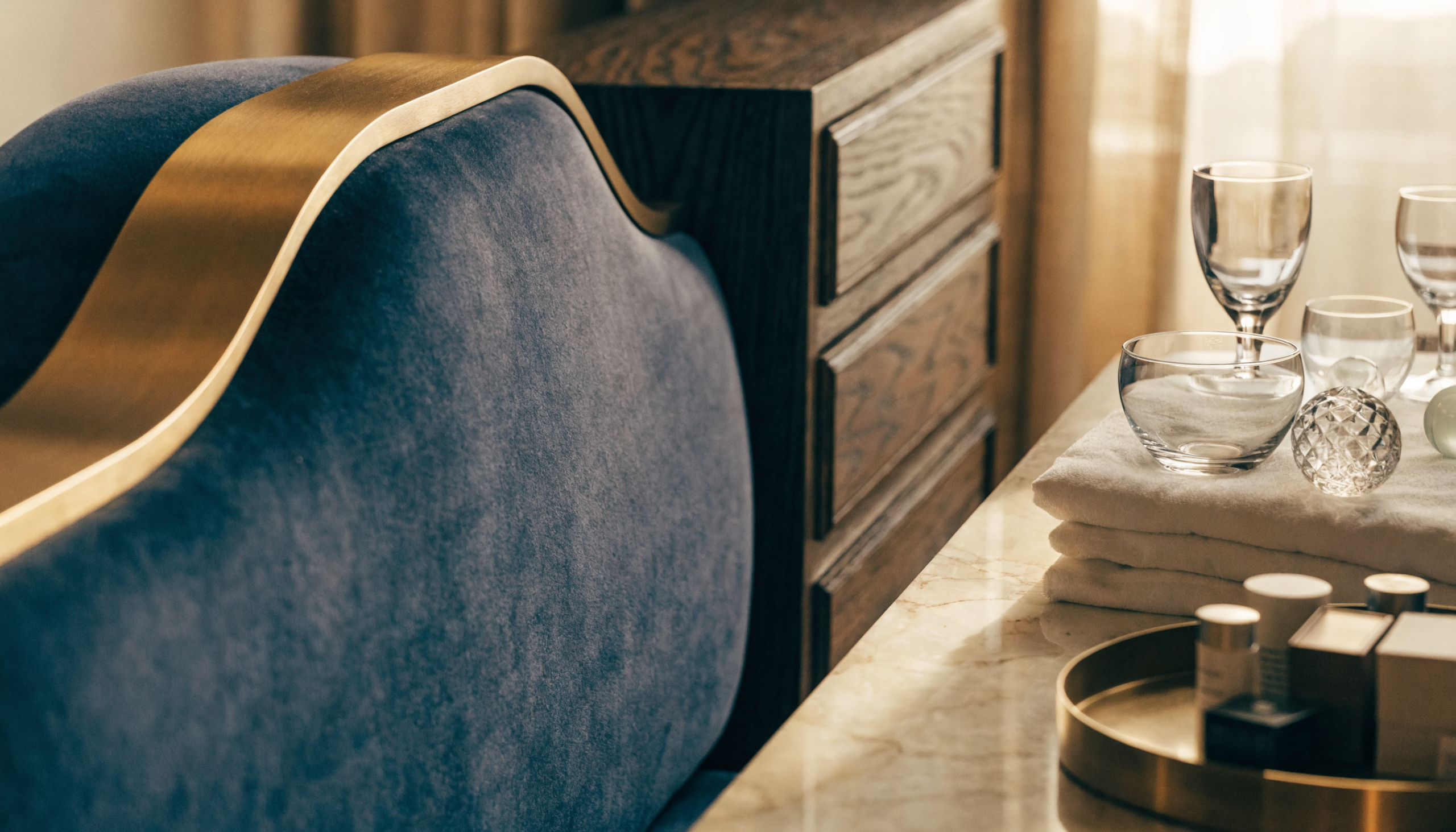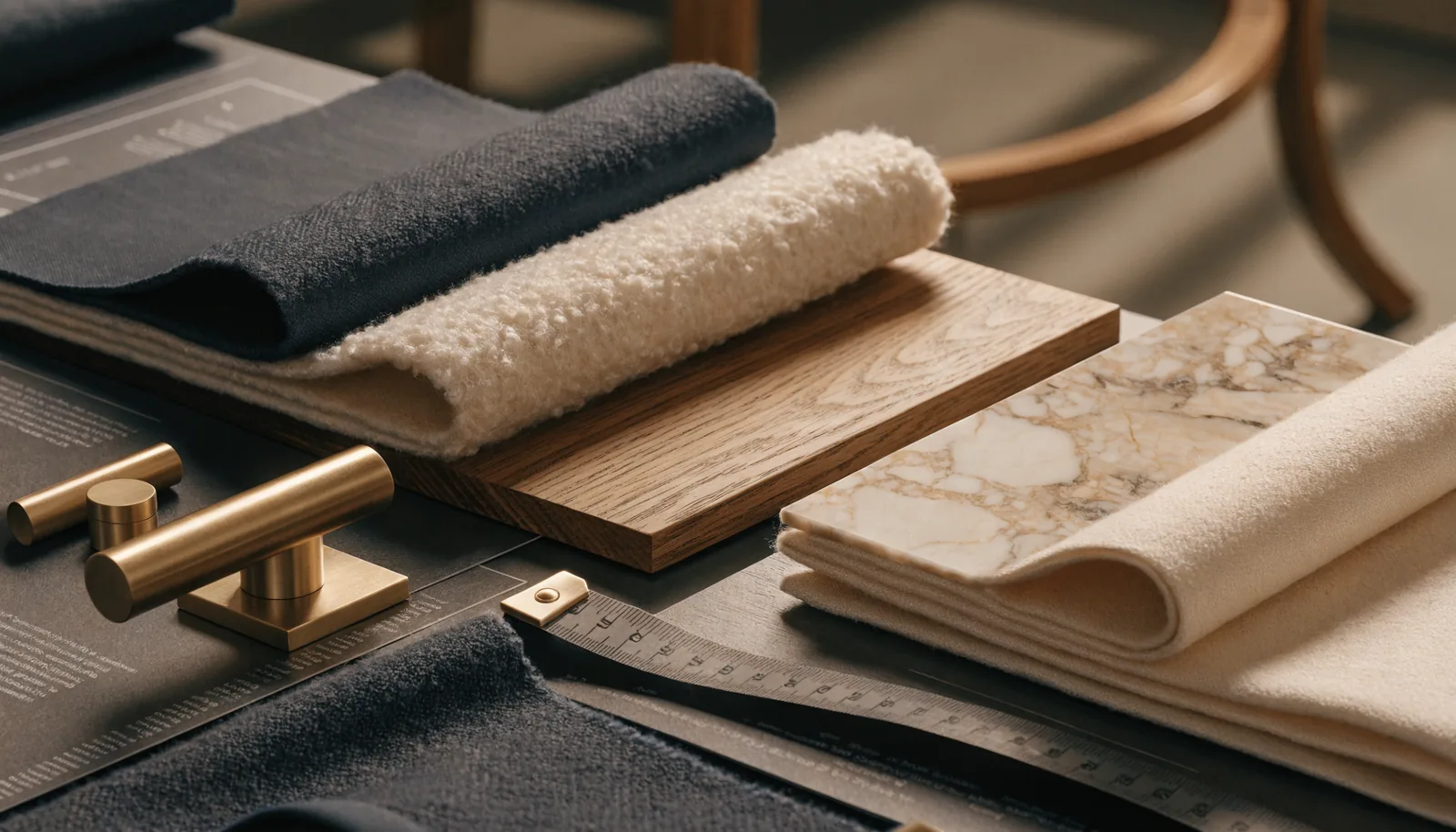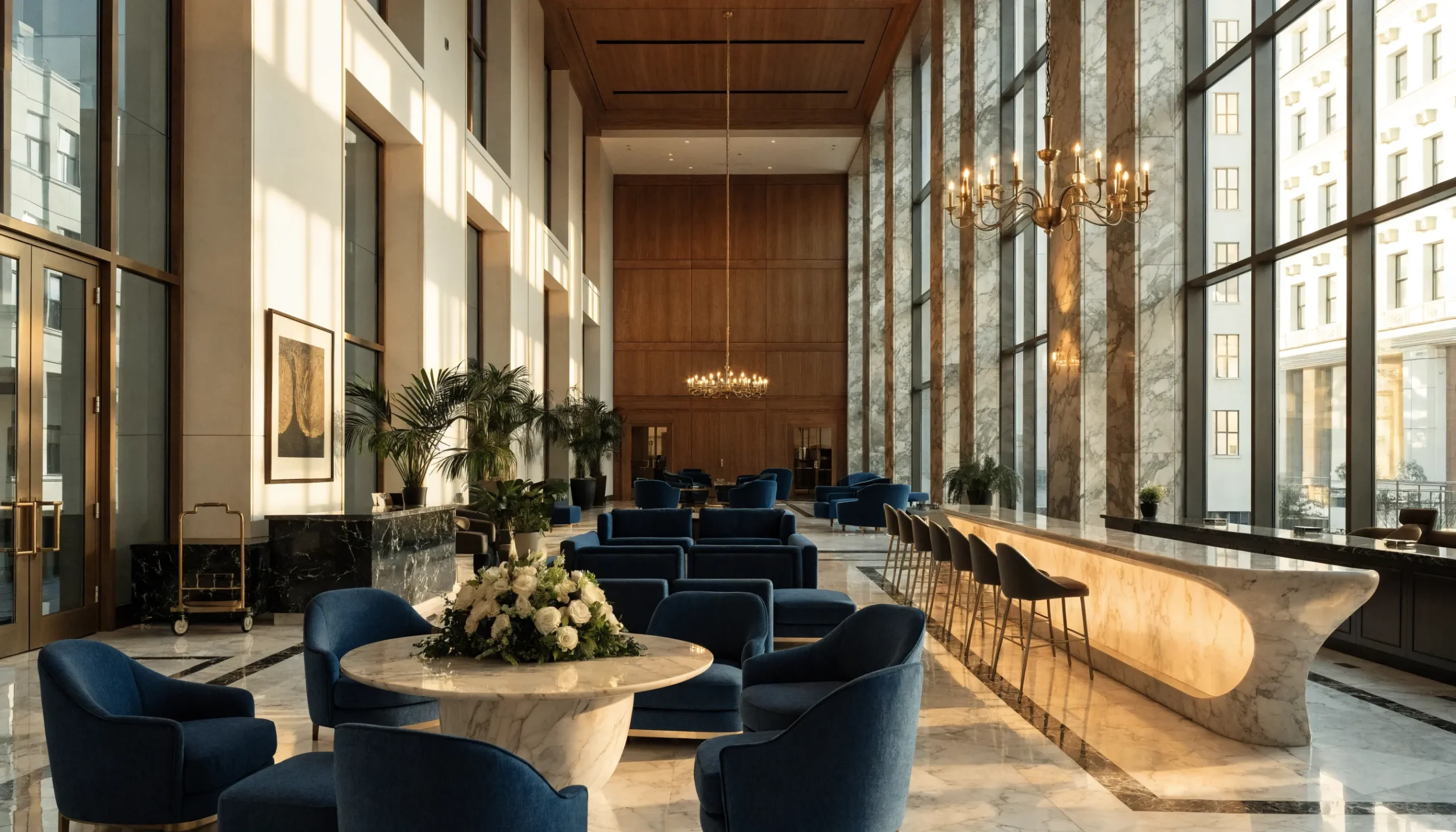
Hotel FF&E and OS&E procurement is the structured process of specifying, sourcing, purchasing, manufacturing, and delivering everything that furnishes and operates a hotel — from beds, lighting and casegoods (FF&E) to linens, glassware and amenities (OS&E). Done well, it protects the investor’s budget, timeline, and brand standards. Done badly, it is where hotel projects lose money and miss their opening date.
For a hotel owner or developer, FF&E and OS&E are not a side detail. Together they typically account for a significant share of the total development budget, and they are the parts of the project a guest actually touches. This guide explains what FF&E and OS&E procurement involves, what it costs, how the process works step by step, and why independent, investor-side procurement protects your investment in a way contractor-led buying cannot.
Last updated: June 2026 · Written by the procurement team at Stoch Hotel Consulting, an independent FF&E & OS&E procurement company operating across Europe since 2011.
What is FF&E in hotels?
FF&E stands for Furniture, Fixtures & Equipment — the durable, movable items that define a hotel’s look, feel, and function but are not permanently built into the structure. In guestrooms, FF&E includes beds, headboards, wardrobes, desks, chairs, nightstands, lighting, mirrors, TVs, and safes. In public areas, it covers lobby and restaurant seating, reception desks, bar counters, artwork, signage, and decorative lighting.
FF&E is treated as a capital investment with a typical useful life of five to ten years, after which it is refreshed or replaced. Because FF&E is high-value, brand-defining, and produced to specification — often custom-made for a single property — it carries the longest lead times and the greatest financial and quality risk in the fit-out.
What is OS&E in hotels?
OS&E stands for Operating Supplies & Equipment — the operational items a hotel needs to run from day one and replenish continuously. OS&E includes guestroom linens and towels, bathroom amenities, glassware, chinaware, cutlery, kitchen smallwares and equipment, housekeeping carts and supplies, uniforms, and front-of-house collateral.
Unlike FF&E, OS&E is operational rather than capital in nature, has much shorter replacement cycles, and is usually procured closer to opening. It is also where many openings stumble: a hotel can have every bed installed and still fail to open guestrooms because the linens, amenities, or minibar items are not on site, in the right quantity (par levels), and to brand standard.
FF&E vs OS&E: what’s the difference?
FF&E and OS&E are procured along distinct pathways because their value, lifecycle, and risk profiles differ. The table below summarises the core differences.
| Dimension | FF&E | OS&E |
|---|---|---|
| What it covers | Beds, casegoods, seating, lighting, mirrors, artwork, reception and bar joinery | Linens, towels, amenities, glassware, chinaware, cutlery, kitchen smallwares, uniforms |
| Nature | Capital expenditure (CapEx) | Operating expenditure (OpEx) |
| Typical lifecycle | 5–10 years | Months to 2–3 years; consumables are immediate |
| Share of development budget* | ~12–15% (higher in luxury) | ~4–7% (higher with extensive F&B) |
| Lead times | Long; often custom-manufactured | Shorter; largely catalogue or semi-custom |
| Procured | From early design development onward | Closer to opening |
| Primary risk | Cost overruns, production defects, late delivery | Wrong quantities, missing items on opening day, off-standard quality |
*Ranges reflect widely cited hotel development benchmarks; actual figures vary materially by asset class, geography, and project scope.
What does hotel FF&E & OS&E procurement actually involve?
Procurement is far more than placing orders. A full-scope FF&E and OS&E procurement mandate runs from the first budget to the final handover and covers eight core disciplines:
- Budget development & validation — building or stress-testing the FF&E and OS&E budget against the design intent, brand standard, and asset class before money is committed.
- Value engineering — finding cost without cutting perceived quality, by re-specifying materials, suppliers, or methods that the guest never sees as a downgrade.
- Global sourcing & competitive tendering — running structured, like-for-like tenders so pricing is genuinely competitive and comparable across manufacturers.
- Supplier negotiation & contract management — securing terms, payment milestones, and warranties that protect the investor, not the supplier.
- Production monitoring & quality control — factory inspections, sample and mock-up sign-off, and pre-shipment checks with photo documentation.
- Logistics coordination & delivery planning — consolidation, freight, customs, and delivery sequencing so items arrive in the right order, not all at once.
- Installation coordination — sequencing placement and snagging on site in step with the construction programme.
- Final handover documentation — closing the project with complete records, warranties, and asset registers.
The value of a single accountable procurement partner is that these stages connect. A budget decision in stage one constrains the tender in stage three; a quality issue caught at the factory in stage five prevents a delay at installation in stage seven.
How much do FF&E and OS&E cost for a hotel?
There is no single number — cost depends on segment (upscale, upper-upscale, or luxury), location, design ambition, and whether the project is a new build, conversion, or renovation. As a planning starting point, the following industry benchmarks are widely used:
- FF&E: approximately 12–15% of total development cost, trending higher for luxury and design-led properties.
- OS&E: approximately 4–7% of development cost, at the higher end for hotels with extensive food & beverage, banqueting, or spa operations.
- FF&E reserve: roughly 3–5% of room revenue is commonly set aside for future FF&E replacement.
For capital planning, however, percentages are less useful than a cost-per-key figure for a comparable property in a comparable market. A luxury alpine resort and an upscale airport hotel can differ by a factor of several times per room — which is why segment-specific, European benchmarks matter more than a single percentage.
“We are not order placers. We are investment protectors.”
— Stoch Hotel Consulting
The hotel FF&E procurement process, step by step
While every project is tailored, a well-run FF&E procurement process follows a predictable sequence. Aligning procurement milestones with the construction and design programme is what keeps a project on time and on budget.
- Budget freeze and specification maturity. FF&E specifications are developed with the designer until they are complete enough to tender accurately.
- Tender package and bid leveling. Specifications go to a vetted supplier list; bids are normalised so they can be compared like-for-like, not on price alone.
- Award, contracting, and deposits. Suppliers are appointed on terms that tie payments to verified production milestones.
- Sample and mock-up room sign-off. A prototype guestroom validates design, quality, and dimensional coordination before mass production — a critical risk filter.
- Production monitoring and factory QC. Inspections during manufacture catch defects while they are still cheap to fix.
- Pre-shipment inspection and consolidation. Goods are checked, documented, and consolidated for efficient freight.
- Delivery sequencing and installation. Items arrive and are placed in the order the site can receive them.
- Snagging, handover, and documentation. Defects are resolved, warranties registered, and the asset handed over with complete records.
Independent vs contractor-led procurement: which protects the investor?
FF&E and OS&E can be bought in several ways: by the general contractor, by the operator, in-house by the owner, or by an independent procurement specialist acting only for the investor. The distinction matters because incentives differ.
When the general contractor controls procurement, the party buying the furniture also profits from it — margins can be embedded and invisible, and there is little incentive to drive supplier prices down. An independent, investor-side procurement partner has no supply margin and no conflict of interest: the only mandate is cost transparency, controlled risk, and delivery discipline. At Stoch Hotel Consulting, this is the core of how we work — benchmarking suppliers and negotiating directly with manufacturers, with clear reporting and no hidden margins.
Common FF&E procurement risks — and how to control them
- Budget overruns from uncontrolled change orders → controlled with a frozen budget and disciplined change management.
- Late delivery from long lead times → controlled with early tendering and active production monitoring.
- Quality failures discovered on site → controlled with mock-up sign-off and factory QC before shipment.
- Brand-standard non-compliance → controlled by procuring against operator standards and design intent from the outset.
- Hidden supplier margins → controlled by independent procurement with transparent reporting.
Frequently asked questions
What is the difference between FF&E and OS&E?
FF&E (Furniture, Fixtures & Equipment) covers durable, capital items like beds, casegoods, lighting, and artwork with a 5–10 year life. OS&E (Operating Supplies & Equipment) covers operational items like linens, glassware, amenities, and uniforms that are replenished continuously. FF&E is CapEx; OS&E is OpEx.
What percentage of a hotel budget is FF&E?
FF&E typically represents around 12–15% of total hotel development cost, trending higher for luxury and design-led properties. OS&E generally adds a further 4–7%. Actual figures vary by segment, location, and scope, so a cost-per-key benchmark for a comparable property is more reliable than a single percentage.
What does a hotel procurement company do?
A hotel procurement company manages the full FF&E and OS&E process on the investor’s behalf — budgeting, sourcing, competitive tendering, supplier negotiation, production and quality control, logistics, installation, and handover — protecting the budget, timeline, and brand standards across the project.
When should FF&E and OS&E procurement start?
FF&E procurement should begin during design development, once specifications are mature enough to tender accurately, because long lead times drive the critical path. OS&E is procured closer to opening but must be planned early enough to guarantee correct quantities and brand-standard quality on day one.
Why use independent procurement instead of the general contractor?
An independent, investor-side procurement partner has no supply margin and no conflict of interest, so its only incentive is to reduce cost, control risk, and document everything transparently. Contractor-led procurement can embed invisible margins because the party buying the goods also profits from them.
Plan your hotel FF&E & OS&E procurement with Stoch Hotel Consulting
Stoch Hotel Consulting is an independent FF&E and OS&E procurement company based in Kraków, operating across Europe since 2011. We have delivered procurement for leading international hotel brands — including Rosewood, Ritz-Carlton, Kempinski, Hyatt, Hilton, Andaz, and Autograph Collection — acting exclusively in the interest of the investor. Tell us about your development and we will show you how independent, transparent procurement protects your budget, timeline, and brand standards.
About the author. Iwona Stoch is the Founder and Strategic Lead of Stoch Hotel Consulting. She combines strategic oversight with hands-on involvement, setting procurement direction and protecting investor interests across luxury and upscale hotel projects throughout Europe.