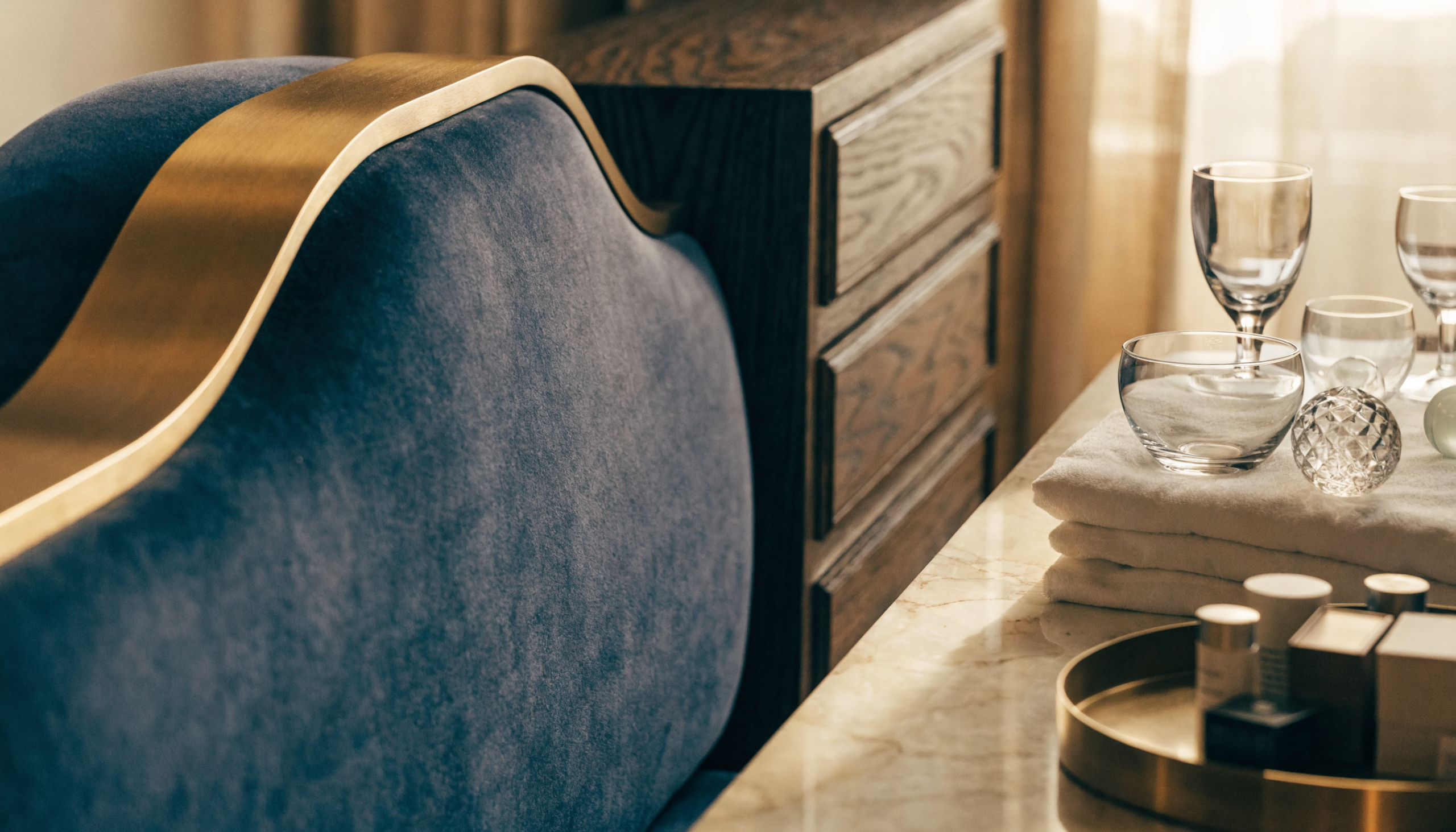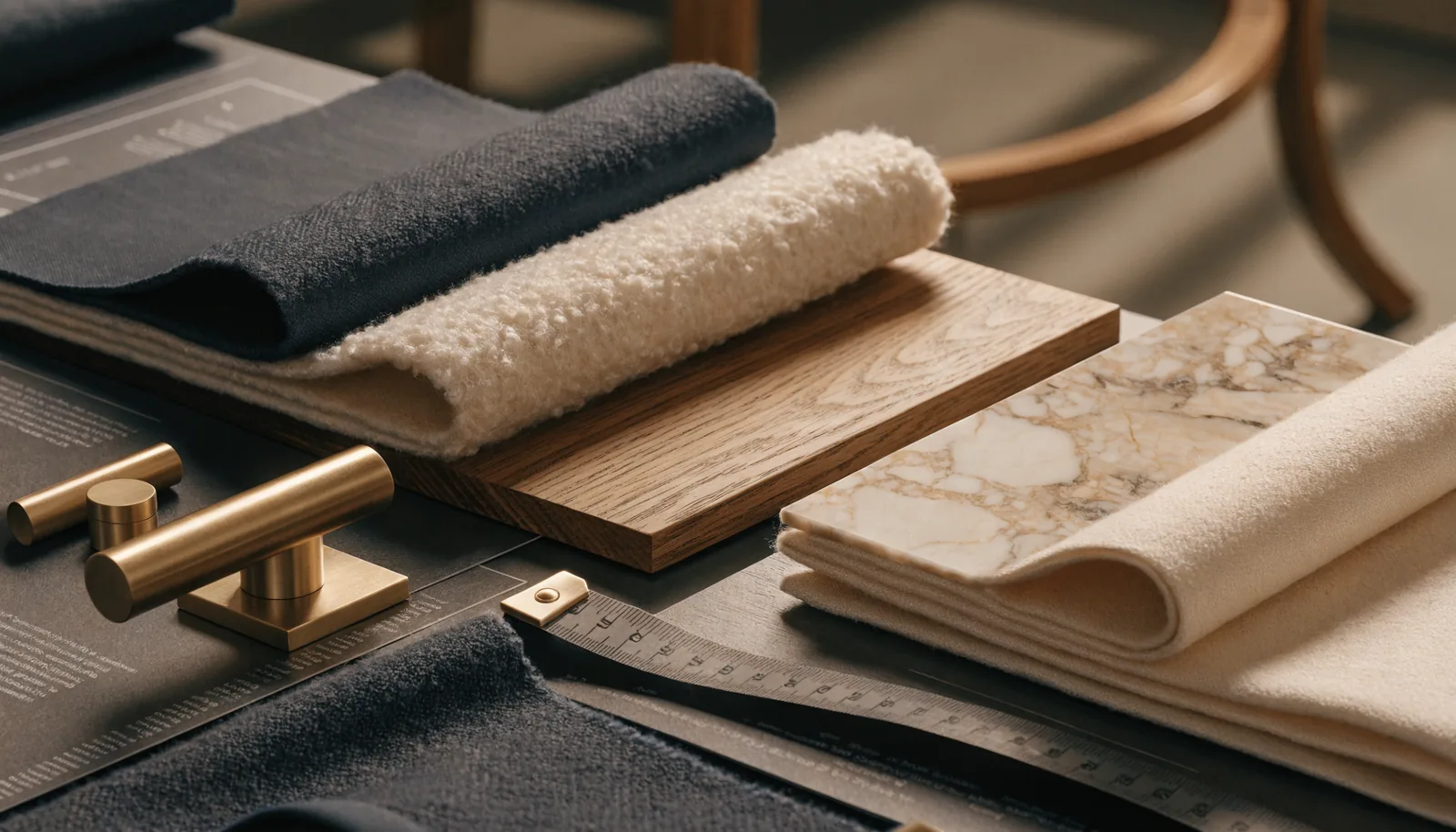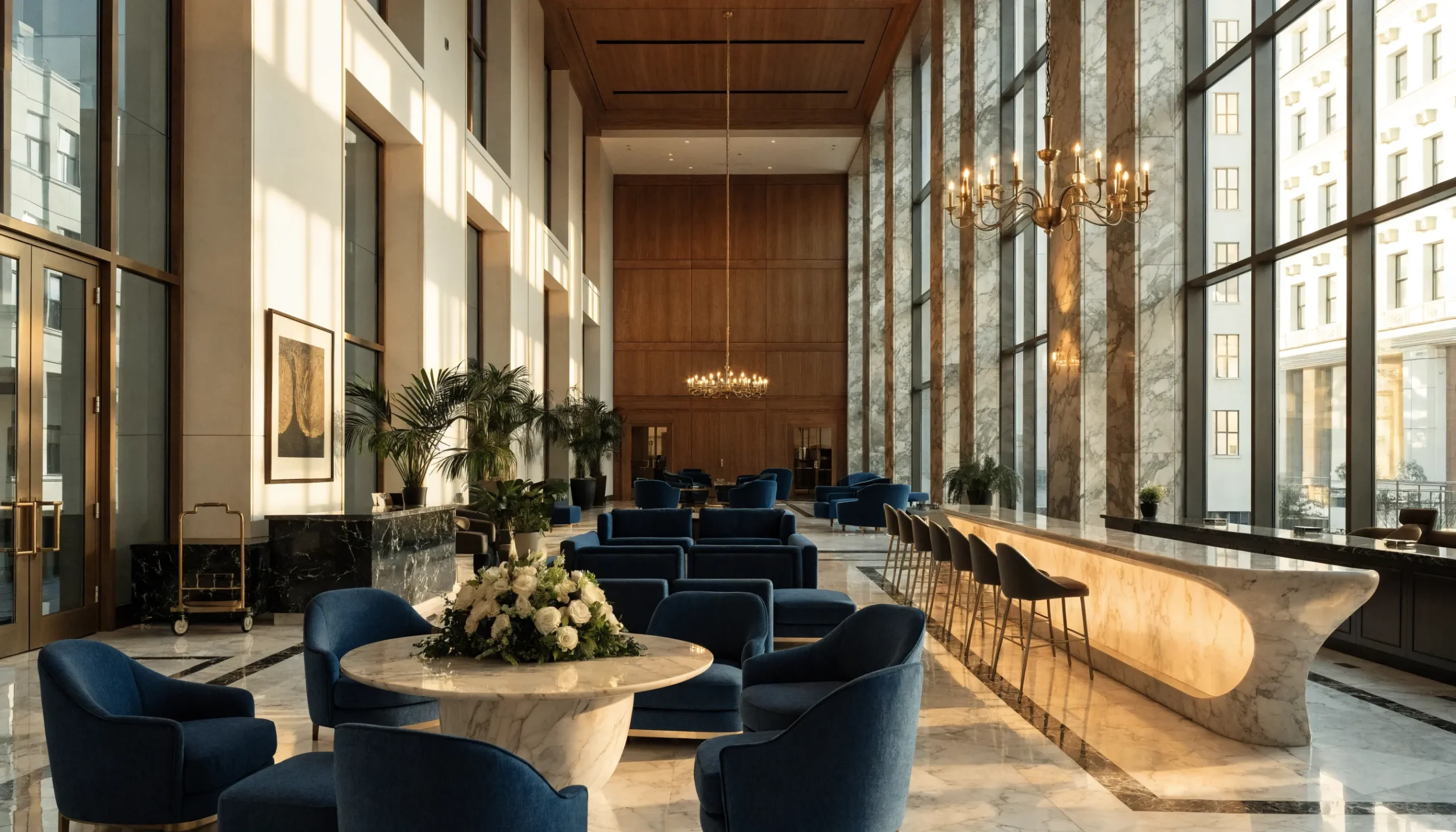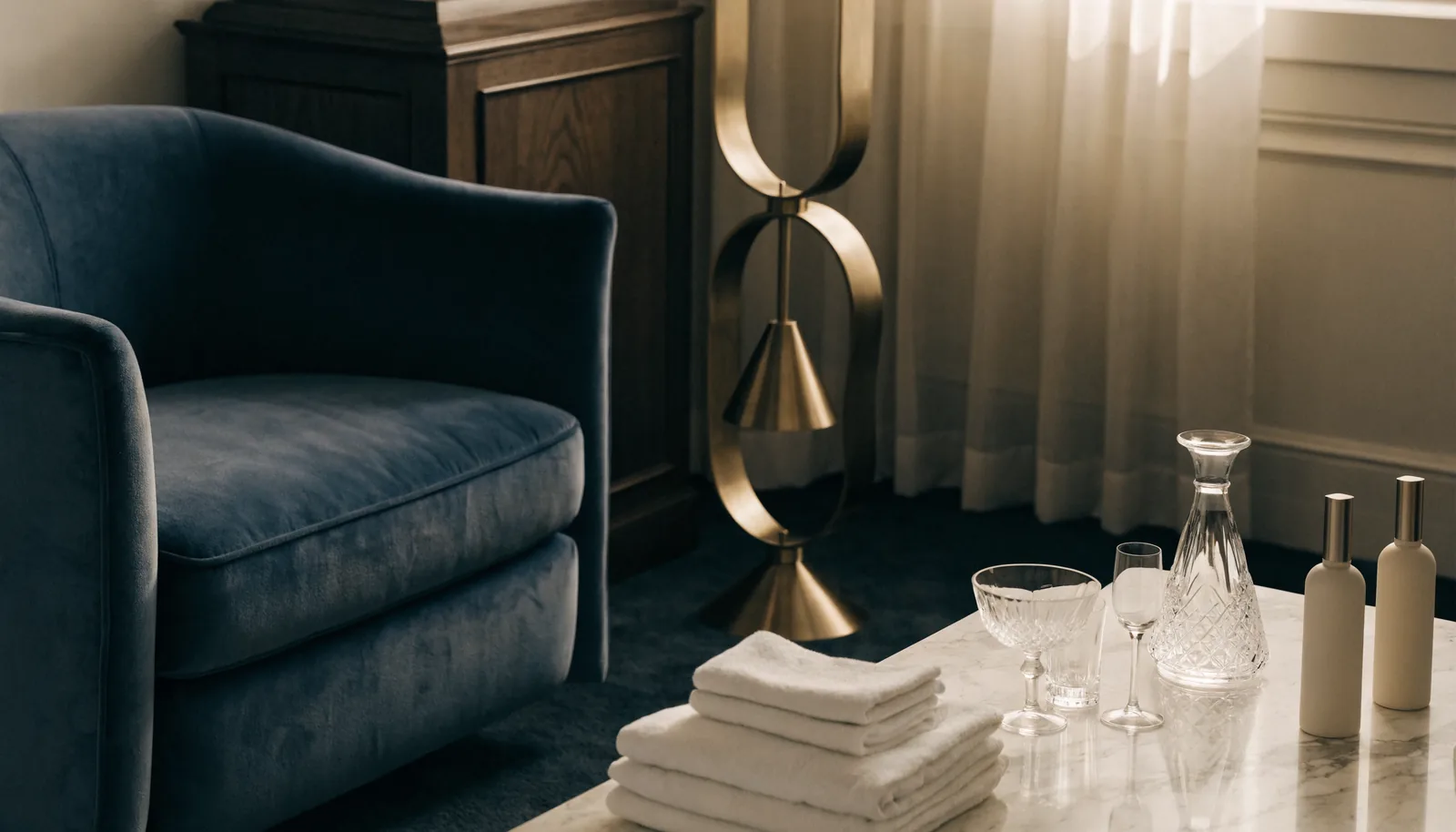
FF&E and OS&E are the two categories of everything that furnishes and operates a hotel. FF&E (Furniture, Fixtures & Equipment) covers the durable, capital items — beds, casegoods, seating, lighting and artwork. OS&E (Operating Supplies & Equipment) covers the operational, consumable items — linens, glassware, amenities and uniforms. FF&E is capital expenditure; OS&E is operating expenditure.
The distinction can sound like accounting trivia, but it shapes how a hotel is budgeted, sourced, manufactured and opened. FF&E and OS&E follow different timelines, carry different risks, and are bought in different ways. Confusing the two — or leaving OS&E as an afterthought — is one of the most common and most expensive mistakes in a hotel project. This guide explains exactly what separates them and why it matters for your budget and your opening date.
Last updated: June 2026 · Written by the procurement team at Stoch Hotel Consulting, an independent FF&E & OS&E procurement company operating across Europe since 2011.
What does FF&E stand for?
FF&E stands for Furniture, Fixtures & Equipment — the durable, movable items that give a hotel its look, comfort and function without being permanently built into the structure. As a rough test: if you could turn the building upside down, FF&E is most of what would fall out.
FF&E is treated as a capital asset with a typical useful life of five to ten years. Because much of it is produced to specification — often custom-made for a single property — it carries the longest lead times and the greatest cost and quality risk in the fit-out. Typical FF&E includes:
- Guestroom furniture: beds, headboards, wardrobes, desks, luggage racks, nightstands, lounge chairs and casegoods.
- Decorative lighting: table, floor and pendant lighting (architectural lighting built into the ceiling is usually construction, not FF&E).
- Soft furnishings: curtains, upholstery, rugs and decorative cushions.
- Public-area furniture: lobby and restaurant seating, reception desks, bar joinery and banquettes.
- Finishing touches: mirrors, artwork, decorative accessories and signage.
What does OS&E stand for?
OS&E stands for Operating Supplies & Equipment — the operational items a hotel needs to open its doors on day one and then replenish continuously. OS&E is what turns a furnished building into a working hotel. It is operational rather than capital in nature, has much shorter replacement cycles, and is usually procured closer to opening. Typical OS&E includes:
- Guestroom supplies: linens, towels, bathrobes, slippers, bathroom amenities and minibar items.
- Food & beverage: glassware, chinaware, cutlery, serveware and buffet equipment.
- Kitchen: smallwares, pots and pans, and operating equipment.
- Housekeeping: carts, cleaning equipment and consumables.
- Front and back of house: uniforms, stationery, collateral and guest-facing print.
OS&E is also where many openings stumble. A hotel can have every bed installed and still fail to open guestrooms because the linens, amenities or glassware are not on site in the right quantities (par levels) and to brand standard.
FF&E vs OS&E: the core differences
FF&E and OS&E are procured along distinct pathways because their value, lifecycle and risk profiles differ. The table below summarises how they compare.
| Dimension | FF&E | OS&E |
|---|---|---|
| Full name | Furniture, Fixtures & Equipment | Operating Supplies & Equipment |
| What it covers | Beds, casegoods, seating, lighting, mirrors, artwork, reception and bar joinery | Linens, towels, amenities, glassware, chinaware, cutlery, kitchen smallwares, uniforms |
| Accounting nature | Capital expenditure (CapEx) — a depreciated asset | Operating expenditure (OpEx) — expensed |
| Typical lifecycle | 5–10 years | Months to 2–3 years; consumables are immediate |
| Share of development budget* | ~12–15% (higher in luxury) | ~4–7% (higher with extensive F&B) |
| Lead times | Long; often custom-manufactured | Shorter; largely catalogue or semi-custom |
| When procured | From early design development | Closer to opening |
| Primary risk | Cost overruns, production defects, late delivery | Wrong quantities, missing items on opening day, off-standard quality |
| How it is specified | With the interior designer, to design intent | Against operator brand standards and the operating concept |
*Ranges reflect widely cited hotel development benchmarks; actual figures vary materially by asset class, geography and project scope.
Is FF&E CapEx or OpEx?
FF&E is capital expenditure (CapEx); OS&E is operating expenditure (OpEx). FF&E is capitalised as a fixed asset and depreciated over its useful life, while OS&E is expensed as part of running the hotel. The hospitality industry’s standard accounting framework, the Uniform System of Accounts for the Lodging Industry (USALI), also recognises an FF&E reserve — a percentage of revenue (commonly 3–5% of room revenue) set aside to fund future FF&E replacement. This is why owners track FF&E so closely: it is a recurring capital commitment, not a one-off purchase.
What share of a hotel budget is FF&E and OS&E?
As planning benchmarks widely used across hotel development:
- FF&E: roughly 12–15% of total development cost, trending higher for luxury and design-led properties.
- OS&E: roughly 4–7% of development cost, at the higher end for hotels with extensive food & beverage, banqueting or spa operations.
These percentages are useful for a first-pass budget, but for capital planning a cost-per-key figure for a comparable property in a comparable market is far more reliable. Advisory firms such as HVS publish hotel development-cost research that owners use as a sense-check — but a luxury alpine resort and an upscale airport hotel can differ several-fold per room, so segment- and geography-specific European benchmarks matter more than any single percentage.
„Owners who treat OS&E as a last-minute purchase are the ones who miss opening day. The furniture gets the attention because it is expensive — but it is the towels, glassware and amenities that decide whether you can actually sell a room.”
— Iwona Stoch, Founder, Stoch Hotel Consulting
Who buys FF&E and OS&E — and when?
Because the two categories sit on different timelines, they are often handled at different stages, and sometimes by different parties:
- FF&E is specified with the interior designer and procured from design development onward, as soon as specifications are mature enough to tender. Long lead times put FF&E on the project’s critical path.
- OS&E is procured closer to opening, against the operator’s brand standards and the operating concept, but it must be planned early enough to guarantee correct quantities and quality on day one.
Whether FF&E and OS&E are bought by the owner, the operator, the general contractor or an independent procurement company has a direct effect on cost transparency and risk. For the full picture of how the process works end to end, see our complete guide to FF&E and OS&E procurement for hotels.
Common mistakes when separating FF&E and OS&E
- Treating OS&E as an afterthought — leaving it so late that quantities, lead times or brand-standard items are wrong on opening day.
- Blurring the budgets — folding OS&E into FF&E, or into the construction contract, so neither is properly controlled or visible.
- Underestimating par levels — buying one set of linens instead of the multiple pars a working hotel needs in circulation, laundry and storage.
- Ignoring the lifecycle — forgetting that OS&E is replenished continuously and FF&E needs a replacement reserve, so day-one cost is not the whole cost.
Frequently asked questions
What does FF&E stand for?
FF&E stands for Furniture, Fixtures & Equipment — the durable, movable items that furnish a hotel, such as beds, casegoods, seating, lighting, mirrors and artwork. It is treated as a capital asset with a typical useful life of five to ten years.
What does OS&E mean?
OS&E means Operating Supplies & Equipment — the operational items a hotel needs to run and replenish continuously, such as linens, towels, glassware, chinaware, cutlery, amenities and uniforms. Unlike FF&E, OS&E is an operating expense with short replacement cycles.
Is OS&E part of FF&E?
No. FF&E and OS&E are separate categories with different budgets, lifecycles and procurement timelines. FF&E is durable, capital equipment; OS&E is operational, consumable supplies. They are usually tendered and tracked separately, even when the same procurement partner manages both.
Is FF&E CapEx or OpEx?
FF&E is capital expenditure (CapEx): it is capitalised as a fixed asset and depreciated over its useful life, and owners typically set aside an FF&E reserve (commonly 3–5% of room revenue) for future replacement. OS&E is operating expenditure (OpEx).
What percentage of a hotel budget is FF&E?
FF&E typically represents around 12–15% of total hotel development cost, higher for luxury properties, and OS&E adds a further 4–7%. Actual figures vary by segment, location and scope, so a cost-per-key benchmark for a comparable property is more reliable than a single percentage.
When should FF&E and OS&E be procured?
FF&E procurement should begin during design development, because long lead times drive the critical path. OS&E is procured closer to opening but must be planned early enough to guarantee correct quantities (par levels) and brand-standard quality on day one.
Plan your FF&E and OS&E procurement with Stoch Hotel Consulting
Stoch Hotel Consulting is an independent FF&E and OS&E procurement company based in Kraków, operating across Europe since 2011. We manage both categories end to end — protecting the budget, timeline and brand standards on behalf of the investor, with no supply margin and no conflict of interest. Tell us about your development and we will show you how independent, transparent procurement keeps FF&E and OS&E on budget and on time.
About the author. Iwona Stoch is the Founder and Strategic Lead of Stoch Hotel Consulting. She combines strategic oversight with hands-on involvement, setting procurement direction and protecting investor interests across luxury and upscale hotel projects throughout Europe.