By Iwona Stoch, Founder & Strategic Lead, Stoch Hotel Consulting
A hotel fit-out audit is a structured, room-by-room walkthrough that checks the FF&E (furniture, fixtures and equipment) and OS&E (operating supplies and equipment) guests actually touch, before problems show up in reviews. This nine-point walkthrough starts in the guest room and moves outward, ending in a written report an owner can act on.
Most operating hotels have no fixed process for checking their own fit-out. Maintenance logs a broken drawer runner when someone reports it; housekeeping flags a stained duvet when it’s too far gone to launder. What’s missing is a walkthrough that looks at FF&E and OS&E the way a guest actually experiences it — category by category, in an order that reflects where problems are found first, not the order a floor plan happens to list them. This is the nine-point walkthrough Stoch Hotel Consulting uses when a hotel wants a fit-out audit before committing budget to a fix, laid out so an owner or general manager can run a first pass themselves.
Why does the order of the walkthrough matter?
Because an audit that jumps around misses things, and because the sequence itself tells you where to put budget first. This isn’t a Stoch-specific idea: HVS, one of the best-known hospitality advisory firms, describes the same logic in its own asset-management methodology — an on-site inspection that works systematically through guestrooms, public areas, back-of-house space, food and beverage, and the hotel’s other facilities, with the findings feeding a structured report rather than a list of ad-hoc notes (HVS on the assessment stage of hotel asset management). What Stoch Hotel Consulting adds to that established sequence is where it starts and what each stop is actually checking for.
According to Iwona Stoch, founder of Stoch Hotel Consulting, the walkthrough always begins in the same place: “I start with the hotel rooms — that’s where guests spend most of their time, form their opinion of the hotel, and have direct contact with most of the fit-out.” Everything else in the sequence follows from that: the guest room is audited first because it carries the most weight in the guest’s experience, not because it happens to be first on a floor plan.
What are the nine points in the walkthrough?
Each stop below covers a distinct fit-out category. Auditing them in this order means the categories with the most guest contact and the most reviews attached to them are checked before anything else.
- Guest room, overall. Start here, not in the lobby. Walk the room the way a guest would use it: from the door to the window, checking sightlines, storage, and whether the layout still matches how the room is actually sold (twin vs. king, connecting doors, accessible units).
- Bathroom. Counter space for a guest’s own toiletries, shower pressure and drain performance, and the condition of the vanity and fixtures. This is the single space guests complain about most, so it earns a slow pass, not a glance.
- Bed, mattress and bedding. Comfort layer, edge support, and — a detail that rarely appears on any checklist — whether the mattress can actually be turned or repositioned by housekeeping without two people wrestling with it.
- Lighting and controls. Whether the guest can reach the bedside switch without getting up, whether the dimmer logic is intuitive on the first try, and whether the fixture itself feels solid under a guest’s hand.
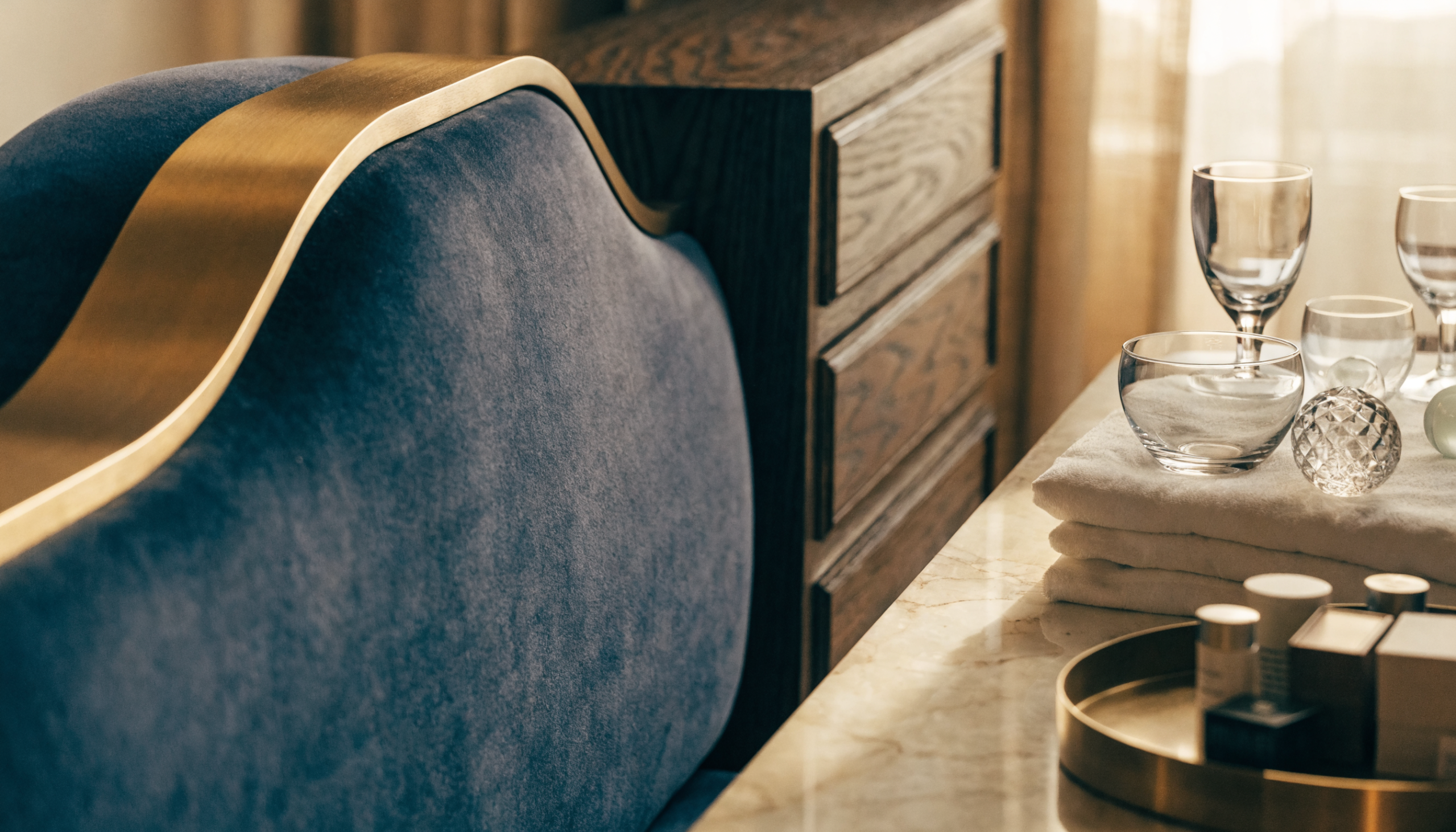
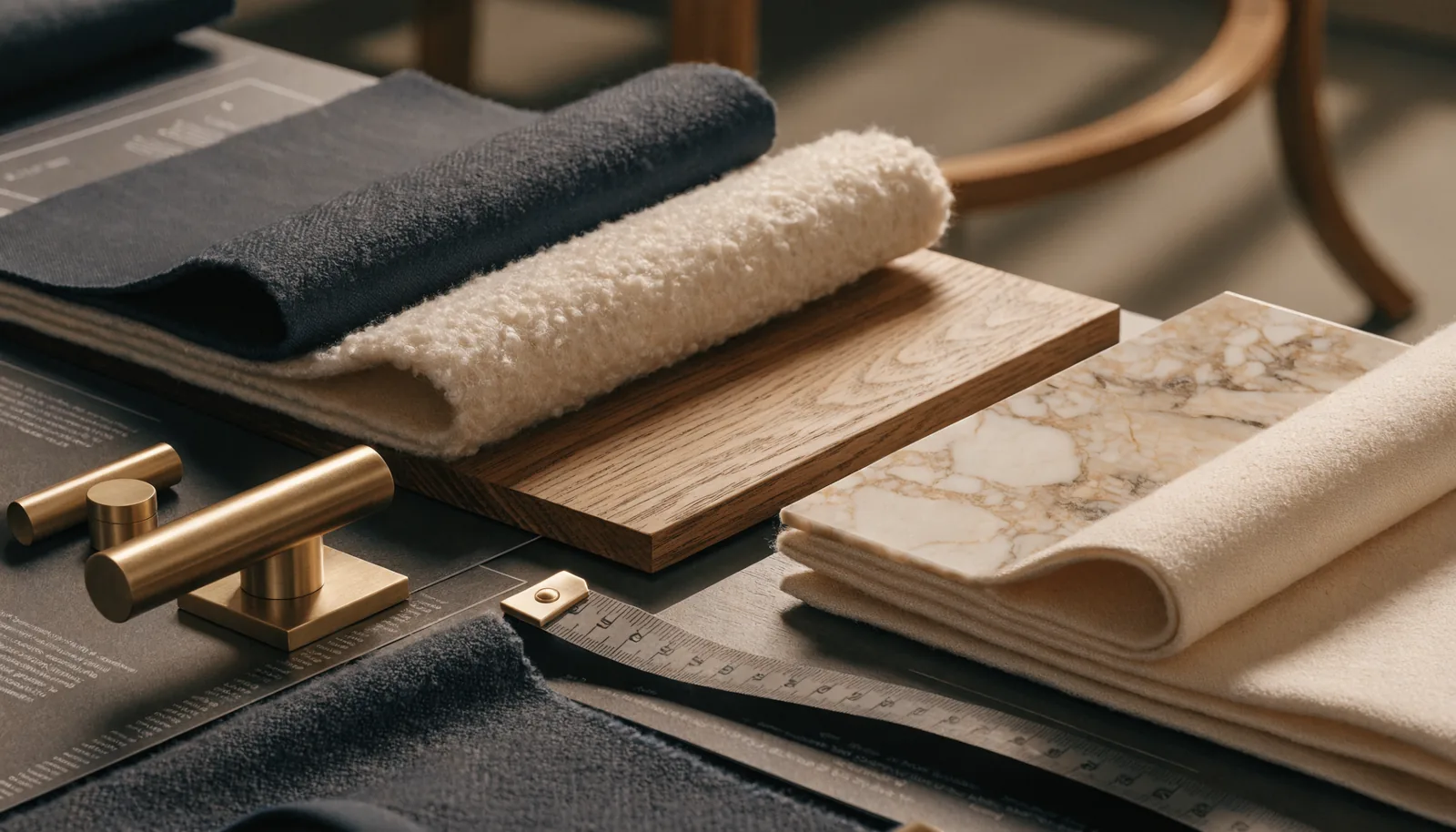
- Contract textiles and upholstery. Check wear at the seams and corners of chairs and headboards first — that’s where contract fabric fails before the rest of the panel shows any sign of it.
- Casegoods and loose furniture. Drawer runners, hinges, veneer edges, and whether finishes still match across pieces bought in different replacement cycles.
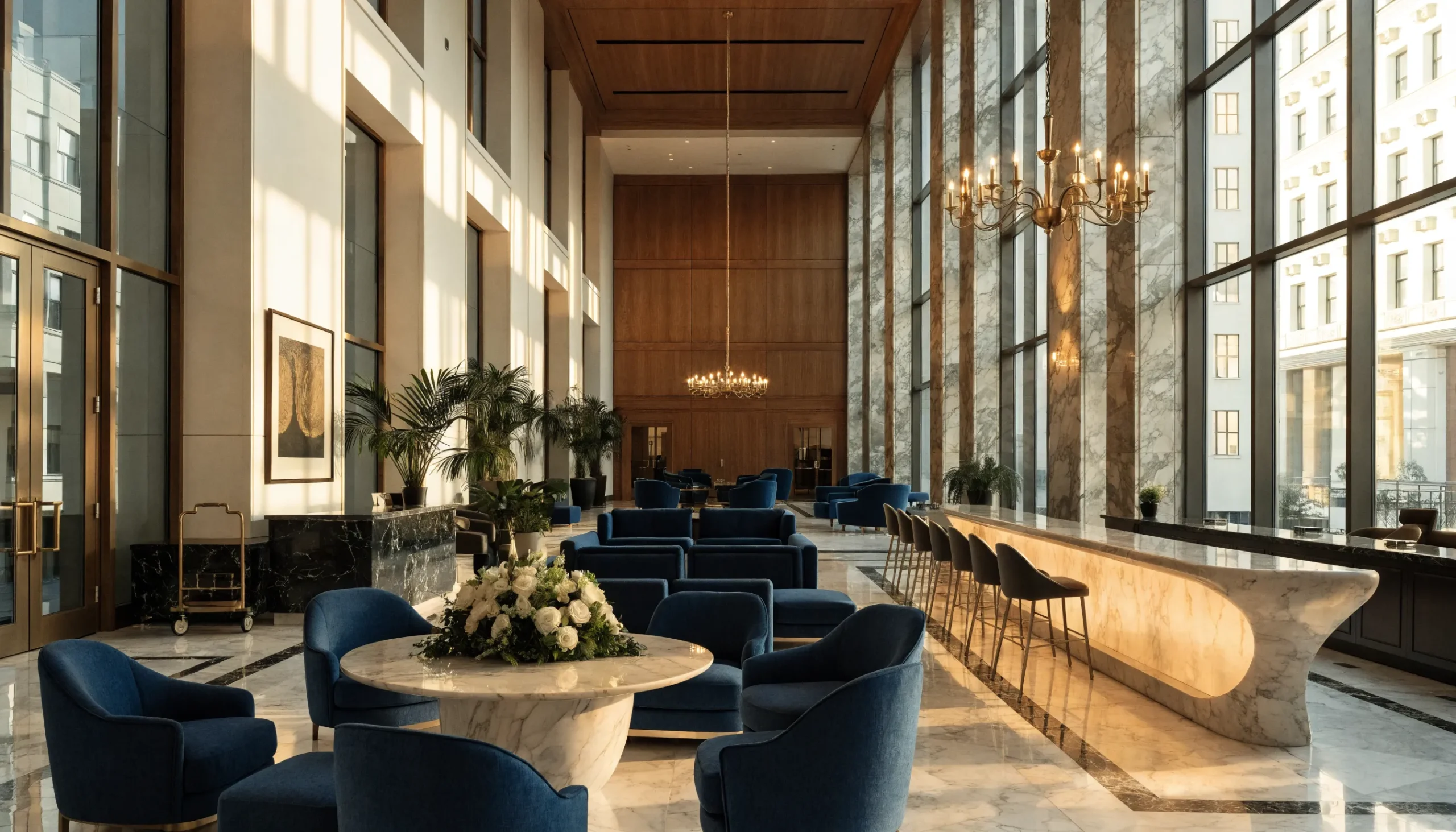
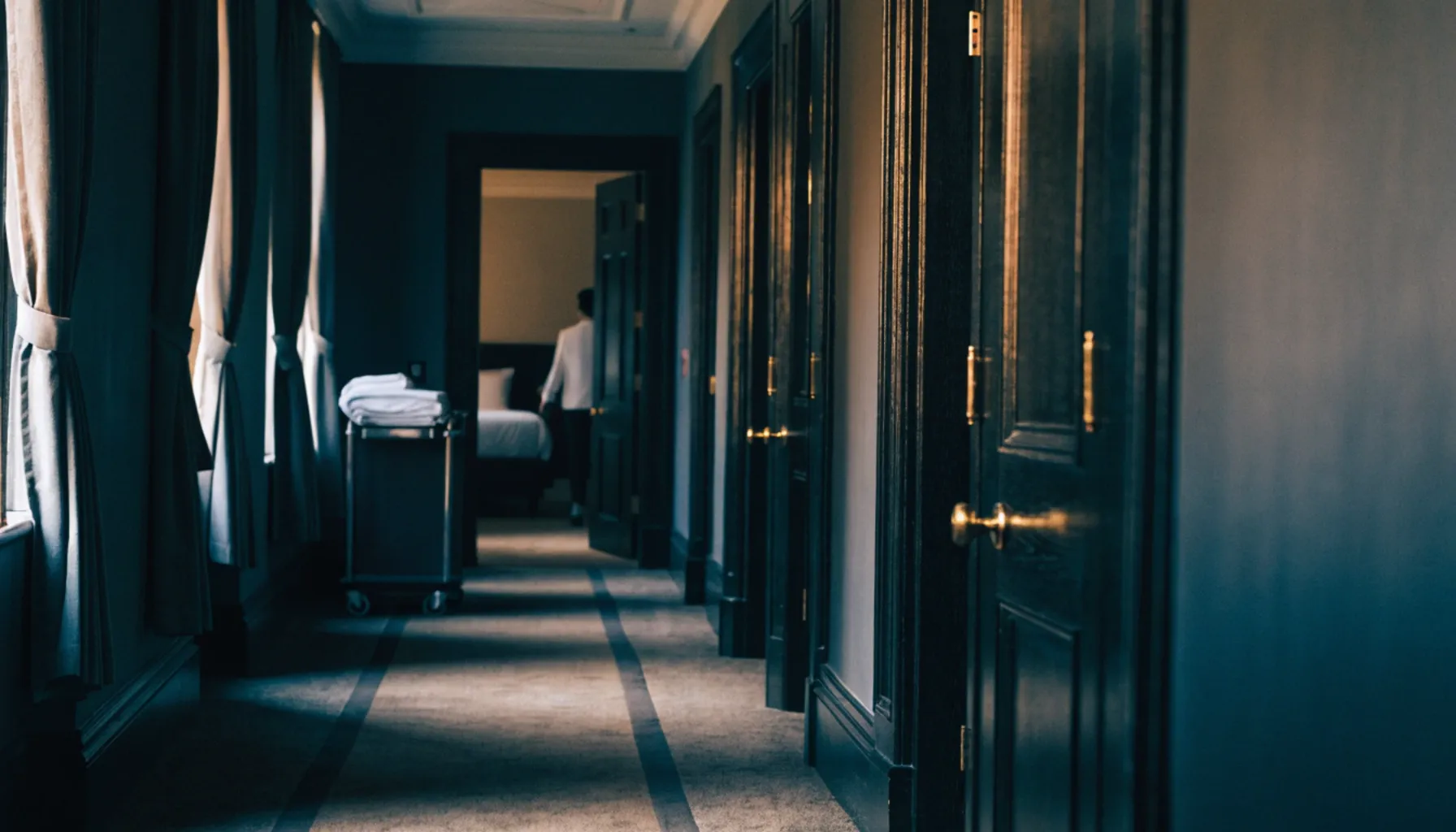
- Corridors and public areas. The transition zones guests pass through repeatedly: carpet wear patterns, wall covering damage at elevator landings, and whether lighting levels are consistent floor to floor.
- F&B outlets. Restaurant and bar seating, table stability, and banquette upholstery — areas that get more daily use-cycles than most guest rooms and are audited far less often as a result.
- Write it up. A walkthrough that stays in someone’s head or a phone’s photo roll doesn’t drive a budget decision. Close the audit with a written record: category, condition, priority, and rough cost to fix, ranked so the owner can see what to act on first.
Is this the same as a daily housekeeping inspection?
No, and mixing the two up is the most common mistake owners make. A housekeeping inspection checks whether a room is clean and ready to sell — it happens every day and it is about condition, not specification. A fit-out audit asks a different question: is this the right mattress, the right fabric, the right fixture for this segment, and has it reached the point where replacing it is the better decision than maintaining it. One is operational; the other feeds the capital plan. A hotel needs both, but only one of them tells an owner where to spend on FF&E and OS&E next year.
Does a fit-out audit actually change the guest-review score?
The link between fit-out condition and guest satisfaction is well documented, even if the studies measuring it are mostly North American. J.D. Power’s 2020 North America Hotel Guest Satisfaction Study — based on responses from 37,843 guests across 102 hotel brands — found that cleanliness and the condition of the room were among the strongest drivers of overall guest satisfaction (J.D. Power’s 2020 hotel guest satisfaction findings). That data is from a different market than most of the hotels Stoch Hotel Consulting audits in Europe, but the underlying mechanism doesn’t change by geography: a guest’s opinion of a hotel is formed largely from what they touch and use in the room, which is precisely what a fit-out audit is built to catch before it becomes a pattern in the reviews. See also the fit-out categories behind bad hotel reviews for how specific complaint types map back to specific FF&E and OS&E decisions.
What should come out of the audit?
A prioritised list, not a mood. For every item flagged, the write-up should record what it is, why it was flagged, how urgent the fix is, and a rough order of cost — enough for an owner to decide whether this year’s budget covers a soft refurbishment of a few categories or whether the number is big enough to justify a fuller renovation. That decision sits downstream of the audit, not inside it: the audit’s only job is to make the condition of the fit-out visible and comparable across all nine categories, the same discipline that runs through the wider FF&E procurement process from specification to installation.
Where the categories being audited split between capital purchases and consumables also matters for who owns the fix — see the difference between FF&E and OS&E for how that split is usually drawn.
Frequently asked questions
How long does a nine-point fit-out audit take?
It depends on hotel size and how many room types need sampling, but the walkthrough itself is designed to be run in a single, focused pass rather than spread across weeks. The write-up afterwards typically takes longer than the walk itself.
Do I need to audit every room, or just a sample?
A sample across room types and floors is usually enough to establish a pattern — the point is to catch category-level problems (a mattress line, a fabric batch), not to inspect every single key. A full-property audit makes sense when a renovation decision is already on the table.
Can an owner or GM run this walkthrough without a consultant?
Yes, as a first pass. The nine-point order gives structure to what many owners already sense but haven’t written down. Where an independent audit adds value is in benchmarking condition against what a category should still deliver at that price segment, and in producing a report that survives a budget conversation.
What’s the difference between this and a Property Improvement Plan (PIP) inspection?
A PIP inspection is run by or on behalf of a brand, against that brand’s own standards, usually tied to a franchise renewal or change of ownership. A fit-out audit is run for the owner, against the guest experience and the condition of the fit-out itself, independent of any brand’s checklist — the two can overlap but they answer different questions for different audiences.
What happens after the audit report is delivered?
The owner decides what to act on and when, usually starting with whatever category carries the highest guest-facing risk relative to its cost to fix. Some items become an immediate soft refurbishment; others go into next year’s FF&E reserve planning.
Iwona Stoch is the founder and strategic lead of Stoch Hotel Consulting, an independent FF&E and OS&E procurement consultancy based in Kraków, working with luxury and upscale hotels across Europe since 2011.
Last updated: August 2026.
Want an independent post-stay audit of your hotel’s fit-out? Talk to Stoch Hotel Consulting.