By Iwona Stoch, Founder & Strategic Lead, Stoch Hotel Consulting
A value engineering substitution survives brand approval in the Gulf when it is qualitatively and aesthetically equivalent to the specified item, with a clear reason — unavailability, high price, or a long lead time. A visible downgrade gets rejected even if the saving is real; a like-for-like swap with a stated reason usually gets approved.
On a hotel project anywhere, value engineering means looking for savings without giving up function. On a branded hotel project in the Gulf, it means something narrower and stricter: every substitution to a specified FF&E (furniture, fixtures and equipment) item has to clear a brand approval step before it can go to purchase order, and the brand — not the owner, and not the procurement team — decides what counts as equivalent. Get that distinction wrong and a value engineering exercise that looked like a clean saving on paper turns into a rejected submittal, a stalled purchase order and a schedule slip on a project competing for capacity with over 100,000 hotel rooms already under construction across the region, and more than 230,000 in the total pipeline.1
What does “value engineering” actually mean in an FF&E procurement context?
Value engineering (VE) is a function-oriented, systematic review of a specification to find where value can be improved — not simply a hunt for a cheaper substitute after the fact. The Society of American Value Engineers International (SAVE International) defines it as a “function-oriented, systematic, team approach to provide value in a product, system, or service,” and the construction industry’s standard version of the process runs through a defined sequence: information gathering, function analysis, creative speculation on alternatives, evaluation, cost analysis and development of the final recommendation.2
Applied to hotel FF&E, that sequence means a proposed substitution should identify what function the original item performs (durability under commercial laundering, load rating, fire rating, visual weight in the room composition), then test whether the alternative performs that same function before cost ever enters the comparison. Treating VE as “find something cheaper” skips the function analysis step entirely — which is exactly the shortcut that gets a submittal rejected at brand review.
Why does the brand’s approval carry more weight than the owner’s sign-off?
On a Gulf hotel project carrying an international operator’s flag, two separate parties have to accept an FF&E specification: the owner, who is paying for it, and the brand (the operator’s design and technical services team), which is protecting the consistency of its standard across every property carrying its name. The owner’s sign-off means the cost and schedule work for the project. The brand’s sign-off means the specification meets the brand’s design intent and technical standard — and on a value engineering substitution, it’s the brand’s sign-off that can block a change the owner has already approved.
Hotel brands formalise this authority in different ways depending on where a property sits in its lifecycle. For an existing, operating hotel, that mechanism is typically a Property Improvement Plan (PIP) — defined by HSMAI as “a requirement by hotel brands that owners undertake renovations and upgrades to meet current chain standards,” generally triggered when a hotel joins a brand system, is sold, or renews its franchise or management agreement.3 A PIP is the brand exercising the same underlying authority — owners don’t get to define “brand standard” unilaterally — but it belongs to a hotel already trading, not to one still under construction. On a new-build Gulf project, the equivalent authority runs through the brand’s design and construction (technical services) standards and its design review team, reviewed submittal by submittal as FF&E packages move through procurement — a parallel mechanism to the PIP, not the same document, but built on the same principle: the brand, not the owner, decides what counts as a compliant standard.
According to Iwona Stoch, founder of Stoch Hotel Consulting: “When you propose a substitution or a swap, the most important thing is that the replacement is equivalent in quality and in appearance to what was specified. The reason for the change also matters — unavailability, a high price, a long lead time. A well-argued reason is what gets a substitution accepted.”
Which substitutions get approved, and which get rejected?
The clearest way to see the equivalency test in practice is to look at two real submittals from Stoch Hotel Consulting’s own project work, decided the opposite way for reasons that have nothing to do with the size of the saving:
| Proposed substitution | Outcome | Why |
|---|---|---|
| Carpet quality downgraded from hand-tufted to machine-tufted | Rejected | A visible, felt drop in quality and craftsmanship — the two products are not equivalent, regardless of the cost saved |
| Bed frame upholstery changed from genuine leather to PU (polyurethane, faux) leather | Accepted | Significant cost saving with the visual result practically identical — the substitute reads as equivalent on the finished product |
| Any substitution proposed without a stated reason | Weaker position | Brand reviewers respond to a documented reason (unavailability, price, lead time) — an unexplained swap reads as cost-cutting for its own sake |
| A substitution that changes a life-safety or performance attribute (fire rating, load rating, flammability class) | Requires separate compliance sign-off | Equivalency on appearance doesn’t cover a regulated performance property — that needs its own verification, not a visual comparison |
The pattern holds across both categories: a substitution that changes what a guest can see or feel is judged on equivalence, not on the percentage saved. Carpet construction is tactile and visible underfoot in a way a hotel guest notices even without knowing the term “hand-tufted”; PU leather on a bed frame’s structural upholstery, by contrast, is rarely touched directly and reads the same as leather from normal viewing distance and lighting. The same logic explains why a value-engineering exercise that treats every line item the same way — as a percentage to shave — misreads how brand reviewers actually decide.
Does OS&E go through the same brand-approval process as FF&E?
Not in the same way. FF&E carries the brand’s visual and structural design intent — it’s what a guest sees and touches as “the room” — so it goes through the brand’s design and technical review on a specification-by-specification basis. OS&E (operating supplies and equipment: linen, amenities, glassware, small guest-room items) is governed more by the brand’s operating standards than by a design submittal process, which means a value engineering substitution on an OS&E line typically clears a different, often less formal approval path than an FF&E substitution of comparable cost. A procurement team that assumes OS&E swaps need the same submittal package as FF&E is over-engineering its own approval process; one that assumes OS&E needs no brand check at all risks missing a standard the operator does enforce, just through a different document.
What should a procurement team put in front of the brand to maximise approval odds?
Two things do most of the work in a submittal, and both come directly from how brand reviewers actually decide, not from how much money is at stake:
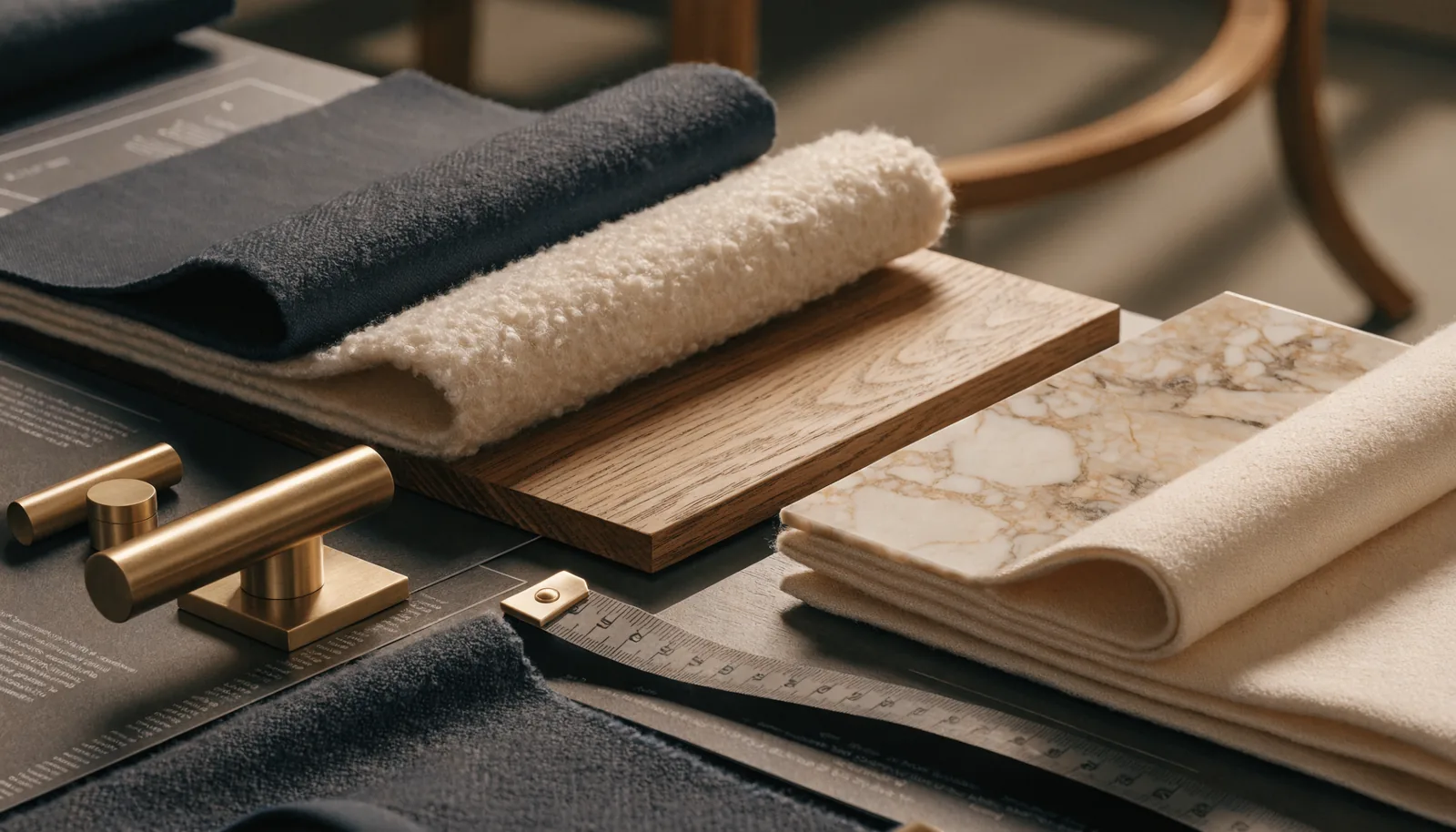
- Show the equivalency, don’t just assert it. A side-by-side sample, swatch or finished mock-up comparing the specified item and the proposed substitute gives the reviewer something to judge, rather than asking them to take the procurement team’s word for “practically identical.”
- State the reason for the change explicitly. Unavailability, price and lead time are all legitimate, brand-recognised reasons for a substitution — but only if they’re named. A submittal that shows the swap without saying why invites the reviewer to assume the reason is simply cost, which puts the burden of proof entirely on the equivalency claim.
Getting this sequence backwards — proposing the cheaper item first and looking for a justification only after a rejection — is one of the more common reasons a value engineering round runs long on a Gulf project, on top of everything else competing for schedule: an FF&E budget per key already under pressure and SABER/SASO certification lead times that don’t pause while a resubmittal works its way back through brand review.
Frequently asked questions
Does a lower price automatically make a value engineering substitution acceptable?
No. Brand reviewers judge a substitution on whether it’s qualitatively and aesthetically equivalent to what was specified, not on the size of the saving. A cheaper item that reads as a visible downgrade — in material, construction or finish — gets rejected regardless of how much it would save.
What’s the difference between a Property Improvement Plan and brand approval on a new-build project?
A Property Improvement Plan (PIP) is the brand-mandated renovation requirement applied to an existing hotel, typically triggered when it joins a brand system, is sold, or renews its agreement. A new-build project isn’t yet subject to a PIP — it goes through the brand’s design and construction standards and technical review team instead, submittal by submittal. Both mechanisms rest on the same principle: the brand, not the owner, defines what meets its standard.
Does OS&E need the same brand sign-off as FF&E?
Usually not through the same process. FF&E goes through design and technical review because it carries the brand’s visual and structural intent. OS&E is governed more through the brand’s operating standards, so a substitution there typically follows a different, often less formal approval path — though it can still fall short of a brand requirement if that path is skipped entirely.
What reasons for a substitution does a brand typically accept?
Unavailability of the originally specified product, a significantly higher price, and a long lead time are the reasons that carry the most weight in practice — provided the substitute is shown to be equivalent in quality and appearance. An unexplained swap, even an equivalent one, is a weaker submittal than the same swap with a stated reason.
Can a value engineering substitution change a fire rating or other regulated performance property?
Not on the basis of a visual equivalency comparison alone. A substitution that touches a life-safety or performance attribute — flammability class, load rating, fire rating — needs its own compliance verification, separate from the aesthetic and quality comparison that governs most FF&E value engineering decisions.
Iwona Stoch is the founder and strategic lead of Stoch Hotel Consulting, an independent FF&E and OS&E procurement consultancy based in Kraków, working with luxury and upscale hotels across Europe and, through its Middle East & GCC advisory services, the Gulf since 2011.
Last updated: September 2026.
Weighing a value engineering round against brand approval on a Gulf hotel project? Stoch Hotel Consulting’s Middle East & GCC procurement advisory reviews FF&E substitutions against brand standards before they go to submittal, alongside related questions like how to audit a hotel procurement agent and whether to hire an FF&E consultant or build the capability in-house. For the general methodology behind a value engineering review, see value engineering in hotel FF&E, and for how brand standards are structured across major operators, see brand-standard FF&E procurement for Marriott, Hilton and Hyatt. Get in touch to talk through your project’s submittal process.
Sources: 1 Zawya Projects, “Middle East hotel pipeline tops 231,000 rooms led by Saudi Arabia and UAE,” citing STR/CoStar data as of end of Q1 2026 (107,653 rooms under construction region-wide; 51,513 in Saudi Arabia, 16,072 in the UAE). 2 Gordian, “Value Engineering in Construction: A 6 Step Methodology,” citing SAVE International’s definition of value engineering. 3 HSMAI Academy, “Property Improvement Plan (PIP)”.